
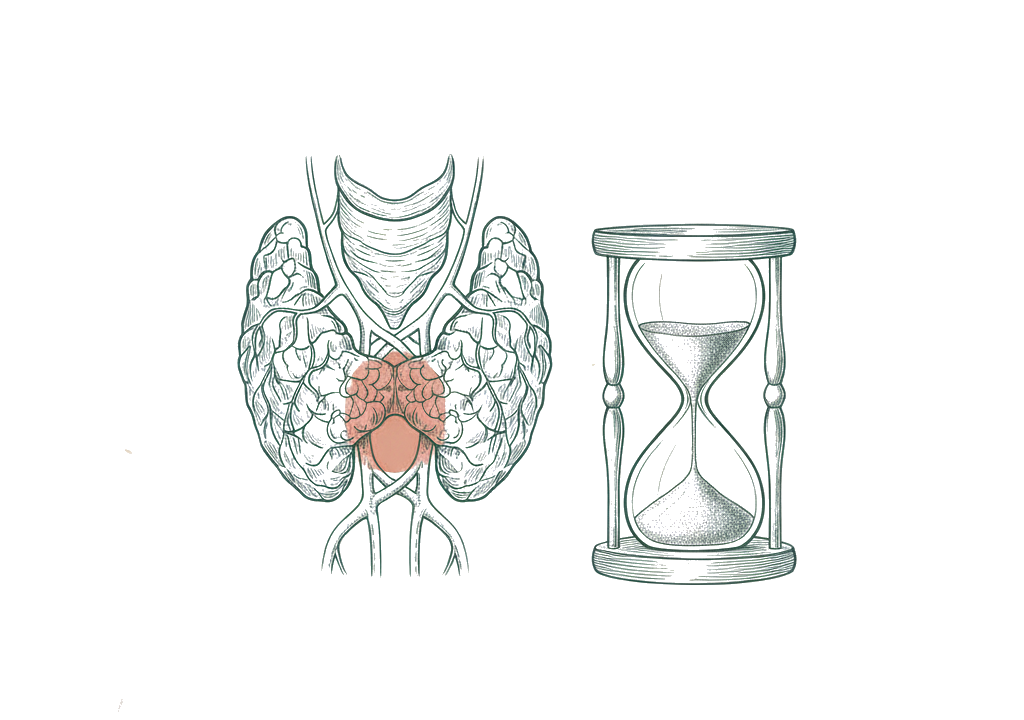
A familiar story: you had your TSH tested, the doctor said "your thyroid is fine," and yet the fatigue remains. This doesn't mean you're imagining your symptoms. TSH is an important marker, but not the only one, and a value within the reference range does not describe the whole picture of thyroid function.
What TSH Actually Shows
TSH is a pituitary hormone that regulates the thyroid gland. It responds to the level of thyroid hormones in the blood, so it reflects the system indirectly. Sometimes TSH is formally normal while your wellbeing suggests otherwise — then it makes sense to look at the thyroid hormones themselves and related markers.
Which Markers Are Worth Discussing With Your Doctor
A broader assessment usually helps you understand the picture more fully. The list below is not a prescription, but a reason for a conversation with a specialist.
- Free T4 — the main hormone the gland produces
- Free T3 — the active form that T4 converts into within tissues
- TPO and TG antibodies — markers of an autoimmune process
- Thyroid ultrasound in case of complaints or changes
Why "Normal" Is Sometimes Not Enough
Reference ranges describe a statistical mass of people, not your individual optimum. Besides, fatigue rarely has a single cause: it's influenced by iron deficiency, low vitamin D, sleep quality, chronic stress, and workload. The thyroid is part of a larger system, and examining it in isolation from everything else is not always productive.
A normal test is not a verdict of "everything's fine, just endure it." It's a starting point for a more attentive analysis.
Where to Reasonably Start
Before looking for rare diagnoses, it's worth covering the basics: improving sleep, assessing nutrition and activity levels, checking iron metabolism and vitamin D. Often fatigue recedes at exactly this level. If, after putting the basics in order, energy is still gone, that's an argument for a more detailed thyroid evaluation together with an endocrinologist.
When It Matters Not to Delay a Doctor's Visit
Sudden weight loss or gain, noticeable palpitations, swelling, marked sensitivity to cold or, conversely, intolerance to heat, changes in skin and hair — these are reasons not to wait. Such signals deserve an in-person review, not self-interpretation of tests found online.
The main idea is simple: fatigue is a real symptom worth respecting. A single marker rarely gives the full answer, and a calm, step-by-step evaluation is almost always more informative than trying to explain everything with one number.
Join Thyroid Balance for a structured, educational approach to energy, habits, and informed clinical conversations.