Nutrition and lifestyle can support Hashimoto’s by improving nutrient availability, digestion, sleep, stress regulation and metabolic health. They cannot diagnose autoimmune thyroiditis, replace prescribed thyroid hormone or reliably reverse established thyroid damage. The practical goal is to act on modifiable factors while a qualified clinician evaluates thyroid function, antibodies, symptoms and structural changes.
Key takeaways:
- Hashimoto’s can progress while thyroid hormone levels remain normal.
- Food supports thyroid physiology but cannot replace indicated medical treatment.
- Digestive function affects access to protein and micronutrients.
- Sleep, stress and metabolic health belong in a complete plan.
- Abnormal tests or neck changes require clinical assessment.
What is Hashimoto’s thyroiditis?
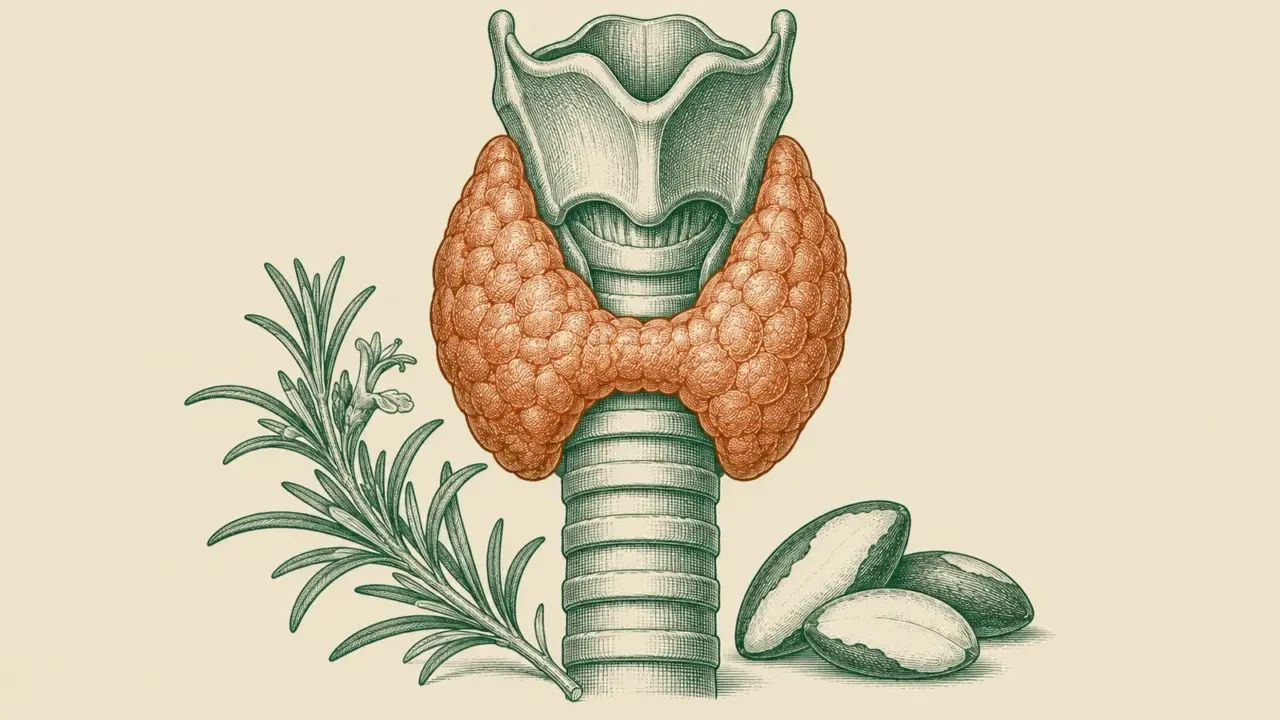
Hashimoto’s thyroiditis is an autoimmune disorder in which the immune system attacks thyroid tissue. Thyroid peroxidase antibodies and thyroglobulin antibodies are therefore more than isolated laboratory numbers: they can identify an immune process even when T3 and T4 remain within the laboratory range.
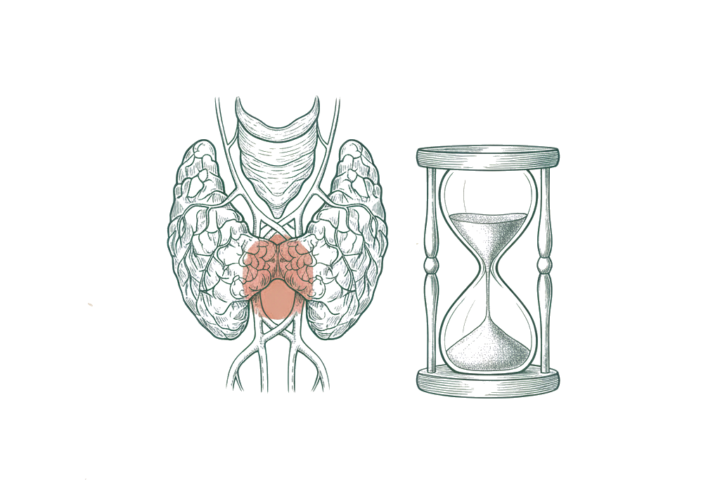
I describe autoimmune thyroiditis as a “quiet war” against the thyroid. Persistent inflammation can create repeated cycles of tissue injury and repair, contributing to follicular remodeling, scarring, goiter or nodular changes and, over time, reduced hormone production.
The National Institute of Diabetes and Digestive and Kidney Diseases reports that hypothyroidism affects about 5 in 100 Americans and identifies Hashimoto’s as its most common cause. Hashimoto’s may initially cause no symptoms, so fatigue, cold intolerance, constipation, hair changes, weight gain or brain fog should be interpreted alongside clinical findings rather than used for self-diagnosis.
“Thyroid antibodies are not merely a number; they signal that an immune process has already begun.” — Ksenia Glinkina, integrative nutritionist-naturopath
What can nutrition do for Hashimoto’s?
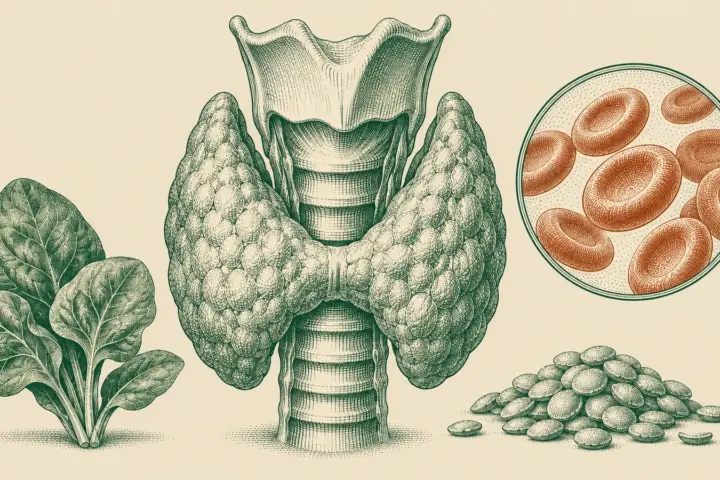
Nutrition can provide the raw materials needed for thyroid hormone synthesis, transport and action. I regard the thyroid as a nutrient-dependent organ that relies on adequate protein, iron, zinc, iodine, selenium, copper, B vitamins and vitamin D.
A useful diet is sufficient rather than extreme. It should provide regular protein-containing meals, varied minimally processed foods and enough energy to avoid adding physiological stress through chronic under-eating.
- Ask a clinician to assess suspected deficiencies instead of treating fatigue with guesswork.
- Use food variety to support protein and micronutrient intake without self-prescribing high-dose supplements.
- Keep meals regular if skipped meals worsen energy, appetite or stress symptoms.
- Track symptoms without assuming that every reaction comes from the thyroid.
Nutrition may support thyroid physiology and general wellbeing, but food cannot restore tissue that has already been substantially damaged. When clinical hypothyroidism is present, the American Thyroid Association identifies thyroid hormone replacement as standard treatment; dietary changes must not be used to stop or alter prescribed medication without the prescriber.
Why does digestion matter in Hashimoto’s?
Digestive function matters because eating nutrients and absorbing them are not the same process. In my framework, poor digestion can restrict access to protein and micronutrients, while dysbiosis and persistent gastrointestinal inflammation may add to the body’s inflammatory burden.
Low stomach acidity, impaired protein digestion, reflux symptoms, bloating or altered bowel habits warrant evaluation rather than automatic use of restrictive diets. Iron or vitamin B12 deficiency, unexplained hair loss and poor tolerance of protein-rich meals can also justify a digestive and nutritional assessment.
The stomach begins protein digestion and helps create conditions for nutrient availability. The gut then participates in absorption and immune regulation; this is why thyroid support that ignores persistent digestive symptoms is incomplete.
- Document reflux, bloating, pain, stool changes and food reactions.
- Review iron, vitamin B12 and other relevant results with a qualified clinician.
- Investigate persistent symptoms instead of assuming “low stomach acid.”
- Build meals that are digestible, nutritionally adequate and sustainable.
Nutriflow’s educational ProGastro gut and digestion program can help adults understand this digestion–nutrient connection, but it does not provide diagnosis or treatment.
Should people with Hashimoto’s avoid gluten?
In my nutrition framework, strict gluten exclusion is recommended for autoimmune disease because gluten sensitivity may activate intestinal immune responses that can accompany thyroid autoimmunity. The approach requires a complete plan, not simply replacing bread with highly processed gluten-free foods.
Gluten is a group of proteins found in wheat, barley and rye. Oats do not naturally contain the same gluten proteins, but ordinary oats may be cross-contaminated during growing or processing; certified gluten-free oats address that exposure concern.
Sequence matters: anyone who may have celiac disease should discuss testing before removing gluten. The NIDDK warns that starting a gluten-free diet before celiac blood tests or biopsy can make the results inaccurate.
- Test for celiac disease first when symptoms, anemia, family history or autoimmunity raise suspicion.
- After testing, plan strict exclusion with a clinician or registered dietitian.
- Replace gluten-containing foods with nutrient-dense alternatives, not dietary gaps.
- Review symptoms and nutritional adequacy rather than treating exclusion as a cure.
A gluten-free diet is a defined nutrition intervention; it is not a substitute for monitoring TSH, free T4, symptoms or prescribed treatment.
Which lifestyle factors can support Hashimoto’s?
Sleep, stress regulation, movement and metabolic health can support the environment in which the thyroid and immune system function. They cannot switch off autoimmunity on command, but neglecting them leaves important drivers of fatigue and inflammation unaddressed.
My clinical framework connects autoimmune thyroiditis with chronic stress, disturbed sleep, stress-axis dysregulation, insulin resistance, excess weight and altered cortisol patterns. Inflammation may also impair peripheral T4-to-T3 conversion and favor reverse T3 formation, reducing thyroid-hormone action at receptors.
- Keep a consistent sleep and waking schedule.
- Choose regular, recoverable movement rather than punishing exercise during severe fatigue.
- Use meals, activity and sleep routines that support glucose regulation.
- Reduce smoking and vaping exposure.
- Avoid routinely heating acidic foods in aluminum foil and review prolonged aluminum-containing antacid use with a clinician.
I also consider lead, cadmium, mercury and aluminum potential contributors to toxic burden through oxidative stress, inflammation and interference with micronutrient-dependent processes. Suspected exposure requires occupational or medical assessment; unvalidated “detox” regimens are not an alternative.
What can nutrition and lifestyle not do?
Nutrition and lifestyle cannot confirm Hashimoto’s, determine whether a nodule is benign, replace thyroid hormone when it is clinically indicated or guarantee lower antibody levels. They also cannot establish that a virus, metal exposure or food is the cause in an individual person.
| Approach | What it may support | What it cannot replace |
|---|---|---|
| Balanced nutrition | Protein and micronutrient availability | Thyroid diagnosis or medication |
| Gluten exclusion | A structured autoimmune nutrition plan | Celiac testing or thyroid monitoring |
| Sleep and stress work | Energy, recovery and self-regulation | Assessment of persistent symptoms |
| Digestive support | Meal tolerance and nutritional adequacy | Investigation of anemia, pain or bleeding |
| Exposure reduction | Lower avoidable toxic burden | Validated exposure testing and treatment |
Another proposed mechanism is molecular mimicry, in which viral proteins resemble thyroid proteins such as thyroid peroxidase or thyroglobulin and may contribute to immune cross-reaction. This mechanism should guide thoughtful clinical investigation, not unsupported antiviral protocols.
“Do not merely observe: act by investigating nutrition, digestion, inflammation, sleep, stress and thyroid function together.” — Ksenia Glinkina, integrative nutritionist-naturopath
How should you build a coordinated Hashimoto’s plan?
A coordinated Hashimoto’s plan combines medical assessment with practical work on food, digestion, sleep, stress and exposure reduction. The purpose is to identify modifiable contributors without promising that lifestyle will reverse autoimmune disease.
- Confirm the clinical picture. Discuss TSH, free T4, thyroid antibodies and symptom history with a qualified clinician; additional tests depend on the individual.
- Assess thyroid structure when indicated. Ask whether neck enlargement, a palpable nodule, pressure symptoms or abnormal examination warrants ultrasound.
- Review nutrient and digestive clues. Discuss anemia, iron or vitamin B12 status, gastrointestinal symptoms and dietary adequacy.
- Test before restricting gluten. Complete appropriate celiac evaluation before exclusion so testing remains interpretable.
- Address daily regulators. Establish repeatable sleep, movement, stress-management and meal routines.
- Reassess with the care team. Review symptoms and clinician-selected laboratory markers without changing medication independently.
At a consultation, ask what the diagnosis is, which result requires action, whether ultrasound is indicated, what may explain persistent symptoms and when follow-up should occur. Nutriflow’s educational Thyroid Balance program can help organize these questions alongside—not instead of—clinical care.
When to see a specialist
See a qualified clinician when thyroid symptoms persist, laboratory findings are abnormal or the neck changes. Seek urgent care for severe breathing difficulty, rapidly increasing neck swelling, marked confusion, fainting or significant chest symptoms.
- A new or enlarging neck lump, hoarseness, pressure or difficulty swallowing
- Severe fatigue, cold intolerance, constipation, swelling or an unusually slow heart rate
- Unexplained weight change, persistent palpitations, tremor or heat intolerance
- Pregnancy, plans for pregnancy or fertility concerns with known thyroid disease
- Iron or vitamin B12 deficiency, gastrointestinal bleeding or persistent abdominal symptoms
- Abnormal TSH, free T4 or thyroid antibodies that have not been clinically interpreted
An endocrinologist can evaluate thyroid function and structural findings. A gastroenterologist or registered dietitian may be appropriate when celiac disease, malabsorption, persistent digestive symptoms or a complex elimination diet is involved.
Use Thyroid Balance to organize supportive habits and prepare informed questions for your clinical care.
Frequently Asked Questions
Can diet reverse Hashimoto’s disease?
No, diet cannot be promised to reverse Hashimoto’s disease or restore thyroid tissue that has been significantly damaged. Nutrition can support protein and micronutrient availability, digestive health and metabolic stability. Hashimoto’s still requires clinical evaluation, and established hypothyroidism may require prescribed thyroid hormone replacement.
Can I stop thyroid medication after changing my diet?
No, do not stop or change thyroid medication because your diet or symptoms improve. Medication decisions depend on thyroid function, clinical context and follow-up results. Discuss any change with the prescribing clinician, because inadequate or excessive replacement can both cause harm.
Do thyroid antibodies matter if TSH and free T4 are normal?
Yes, thyroid antibodies can indicate an autoimmune process even when TSH and free T4 remain within range. Normal hormone levels mean thyroid function is currently preserved, not that antibodies should be ignored. A clinician can determine the diagnosis, appropriate monitoring and whether structural assessment is indicated.
Should I remove gluten before being tested for celiac disease?
No, complete appropriate celiac testing before starting a gluten-free diet. Removing gluten can reduce antibody and intestinal findings, making diagnostic results less reliable. Once testing is complete, Ksenia Glinkina’s autoimmune nutrition framework uses strict gluten exclusion planned with a clinician or registered dietitian.
Which foods are best for Hashimoto’s?
No single food treats Hashimoto’s. A useful pattern supplies adequate energy, protein and varied whole foods that contribute iron, zinc, iodine, selenium, copper, B vitamins and vitamin D. Individual needs, allergies, celiac disease, digestive tolerance and prescribed treatment should shape the final plan.
Does Hashimoto’s always require an ultrasound?
No, ultrasound is not automatically required for every person with Hashimoto’s. A clinician may recommend it when examination reveals enlargement or a nodule, when pressure or swallowing symptoms occur, or when imaging is needed to clarify thyroid structure. Blood tests and ultrasound answer different clinical questions.
Can stress cause Hashimoto’s symptoms to flare?
Stress can worsen sleep, fatigue, appetite regulation and symptom perception, while chronic stress-axis dysregulation may contribute to an unfavorable inflammatory and metabolic environment. Stress management may support wellbeing, but it cannot confirm a thyroid flare or replace laboratory and clinical assessment.
Author: Ksenia Glinkina — integrative nutritionist-naturopath, Bastyr University (USA), 15+ years of practice.
Sources
Nutriflow provides evidence-informed nutrition and wellbeing education. Explore its programs as learning support while continuing care with qualified health professionals.
This article is for information only and does not replace a consultation with a qualified clinician. If you have symptoms, see a specialist.