Ferritin matters in thyroid health because it reflects stored iron, while serum iron is a fluctuating snapshot and hemoglobin may remain normal during early depletion. Iron supports thyroid hormone synthesis, so persistent fatigue, cold intolerance, hair loss, or poor exercise tolerance justify a clinician-led review of ferritin, blood counts, inflammation, thyroid markers, losses, diet, and digestion.
Key takeaways:
- Ferritin reflects iron reserves more directly than serum iron or hemoglobin alone.
- Iron is required for enzymes involved in thyroid hormone synthesis.
- Low ferritin can result from losses, low intake, or impaired digestion and absorption.
- Inflammation can raise ferritin and conceal depleted usable iron.
Why does ferritin matter for thyroid function?
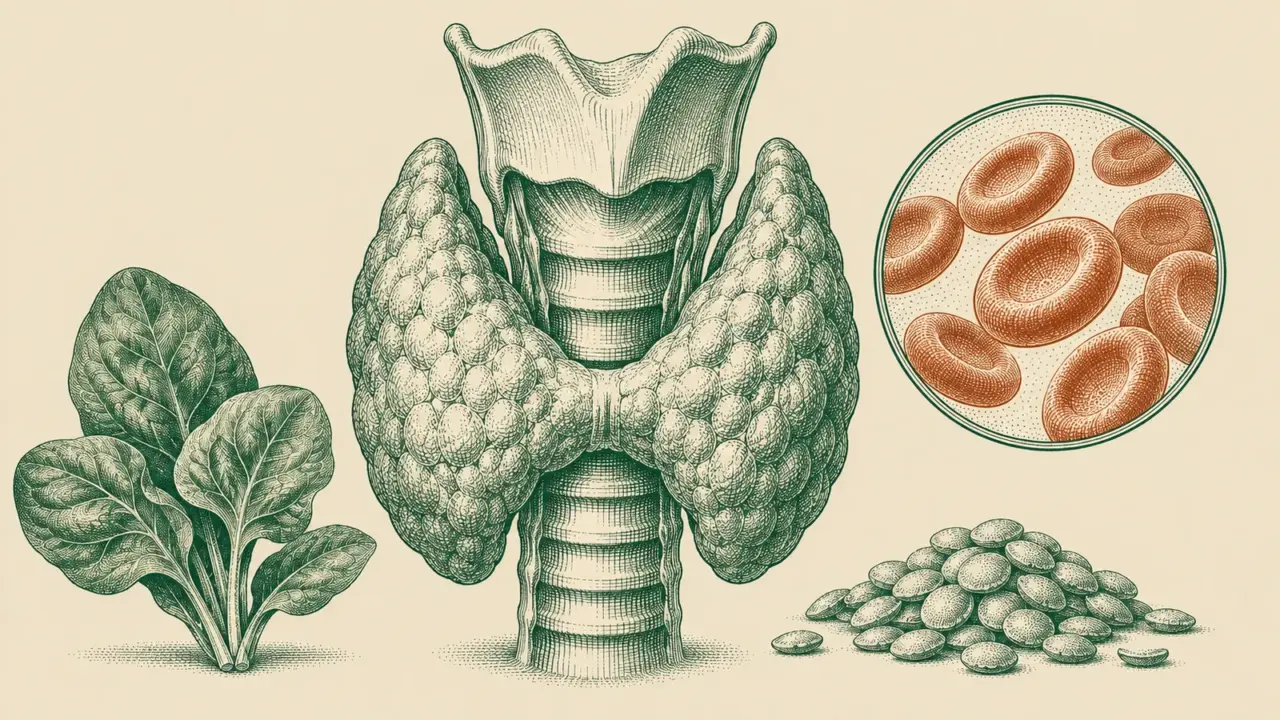
Ferritin is an iron-storage protein whose blood concentration helps clinicians estimate the body's iron reserves. Serum iron describes iron circulating at one moment, while hemoglobin is the oxygen-carrying protein inside red blood cells; neither measurement alone gives a complete picture of stored iron.
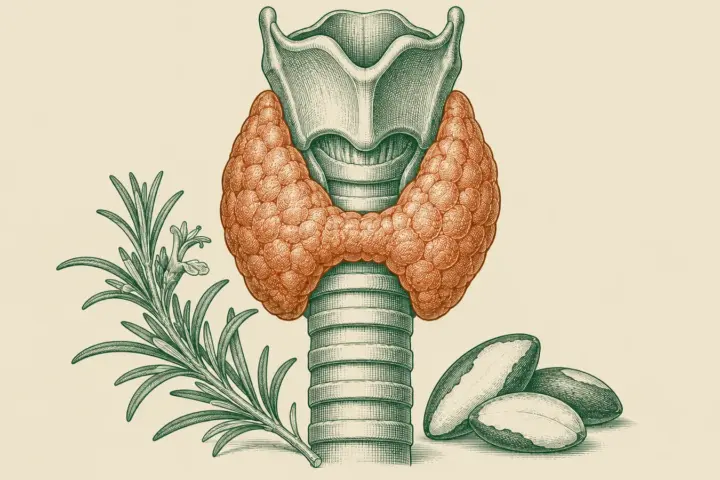
Iron also supports thyroid peroxidase, an enzyme involved in producing thyroid hormones. A 2023 systematic review and meta-analysis found an association between iron deficiency and lower thyroid hormone measurements in studied groups, although association does not establish that low ferritin is the sole cause of thyroid dysfunction.
“When hypothyroidism and low ferritin appear together, I evaluate the thyroid, iron reserves, blood loss, and digestion as one connected pattern.” — Ksenia Glinkina, integrative nutritionist-naturopath
In my practice framework, cold hands and feet, fatigue, swelling, hair loss, and difficulty managing weight warrant assessment of both iron status and thyroid function. These overlapping symptoms cannot diagnose either condition, but they explain why checking only thyroid-stimulating hormone or only hemoglobin may leave part of the picture unseen.
Why is ferritin more useful than serum iron or hemoglobin alone?
Ferritin is usually more informative for iron reserves because it changes as stored iron becomes depleted. Serum iron can vary with timing, meals, and recent physiology, while hemoglobin may not fall until iron depletion has progressed to iron-deficiency anemia.
| Marker | What it represents | Main limitation |
|---|---|---|
| Ferritin, ng/mL | Stored iron | Can rise with inflammation |
| Serum iron, µg/dL or µmol/L | Iron circulating at sampling | Fluctuates and does not measure total stores |
| Hemoglobin, g/dL or g/L | Oxygen-carrying red-cell protein | May remain normal in early depletion |
| Transferrin saturation, % | Share of transport protein carrying iron | Requires interpretation with other markers |
| C-reactive protein, mg/L | Inflammatory context | Does not measure iron stores |
The World Health Organization recognizes ferritin as a marker for assessing iron status and advises accounting for infection or inflammation. A useful panel may therefore include a complete blood count, ferritin, transferrin or total iron-binding capacity, transferrin saturation, and C-reactive protein, selected and interpreted by a clinician.
What ferritin level should you aim for?
No single ferritin target diagnoses every adult, and laboratory ranges must be interpreted with symptoms, inflammation, age, sex, pregnancy status, and medical history. Within my nutrition framework, I use a practical adult discussion point of ferritin in ng/mL at least comparable to body weight in kilograms and avoid accepting 10–40 ng/mL as automatically optimal.
This practitioner target is not the same as a universal diagnostic cutoff. WHO guidance uses ferritin below 15 µg/L to identify iron deficiency in apparently healthy adults and below 70 µg/L in adults with infection or inflammation; 1 µg/L equals 1 ng/mL. Clinical guidelines, laboratory methods, and individual circumstances still govern diagnosis.
For children, my educational framework uses 40 ng/mL as a discussion point, but pediatric results require a pediatric clinician because age and inflammatory status change interpretation. Ferritin above 150 ng/mL in women or 250 ng/mL in men prompts me to ask about inflammation and discuss C-reactive protein and erythrocyte sedimentation rate rather than assuming iron overload.
Why can digestion drive low ferritin?
Low ferritin is not always an intake problem; impaired digestion and absorption can prevent dietary iron from becoming available. Stomach acid supports nonheme iron absorption, and adequate protein digestion supplies amino acids needed for transport proteins and broader thyroid physiology.
Low stomach acidity is therefore part of my assessment when low ferritin accompanies reflux, belching, heaviness after meals, bloating, poor appetite, or persistent nutrient deficiencies. The NIH Office of Dietary Supplements also notes that gastric acid has an important role in nonheme iron absorption and that acid-suppressing medicines can reduce absorption in some people.
Poor digestion may contribute to inadequate availability of iron, zinc, iodine, selenium, copper, B vitamins, and amino acids required for normal thyroid function. In my systems-based model, low acidity may also favor dysbiosis—an altered intestinal microbial community—which can accompany inflammation and autoimmune patterns; it does not by itself prove Hashimoto's thyroiditis or hypothyroidism.
People with digestive symptoms can use Nutriflow's ProGastro gut and digestion program for education while seeking clinical assessment for suspected malabsorption, bleeding, infection, or thyroid disease.
What causes low ferritin when you have thyroid symptoms?
Low ferritin usually reflects iron loss, insufficient intake, impaired absorption, or a combination of these factors. Finding the cause matters because food changes alone cannot correct continuing blood loss or an untreated gastrointestinal disorder.
- Heavy menstrual bleeding, other bleeding, frequent blood donation, or pregnancy-related demand.
- Gastrointestinal blood loss associated with ulcers or other digestive disease.
- Parasitic infection where exposure and clinical context make it plausible.
- Low intake of bioavailable iron, including diets without well-planned alternatives to heme sources.
- Low stomach acidity, digestive dysfunction, or another cause of malabsorption.
- Insufficient cofactors, including vitamin B12, folate, vitamins C and E, copper, magnesium, and zinc.
The cofactors do not replace iron, and testing all of them is not appropriate for everyone. A qualified clinician should choose investigations from the history, symptoms, medications, diet, menstrual status, and gastrointestinal findings rather than ordering an indiscriminate panel.
How can food support ferritin without self-treating?
Food can support iron intake, but a substantial deficiency or anemia needs clinical evaluation and may require treatment beyond diet. Do not start iron supplements or choose a dose from a ferritin result without a clinician, because the form, timing, interactions, cause, and risk of excess all matter.
- Build iron-containing meals. Heme iron comes from meat, organ meats, egg yolk, and oysters; nonheme iron comes from legumes, grains, nuts, seeds, and fortified foods.
- Use absorption-supportive pairings. Vitamin C-rich foods can improve nonheme iron absorption, while adequate protein supports overall nutrition.
- Separate inhibitors. My approach removes or substantially reduces tea and coffee during correction and avoids taking them with meals. I also pause dairy around iron-focused meals because calcium may interfere with absorption.
- Review digestion. Discuss reflux, low appetite, bloating, acid-suppressing medicines, and possible malabsorption with a clinician.
- Retest as directed. Follow-up should include symptoms and the relevant iron, blood-count, inflammatory, and thyroid markers.
My working estimates place heme iron bioavailability at 30–40% and nonheme iron at about 5–10%. NIH describes higher bioavailability for heme iron and estimates overall absorption at 14–18% from mixed diets versus 5–12% from vegetarian diets, showing why the whole meal pattern matters.
What are the common mistakes in thyroid and iron testing?
The most common mistake is declaring iron status normal from hemoglobin or serum iron alone. A second mistake is treating a ferritin value without investigating why it is low or whether inflammation makes it misleading.
- Mistake: attributing fatigue, hair loss, or cold intolerance only to the thyroid. Better question: were ferritin, blood count, and relevant iron indices reviewed?
- Mistake: assuming high ferritin always means excess iron. Better question: were inflammation, liver health, infection, and iron saturation considered?
- Mistake: repeatedly changing food without evaluating blood loss. Better question: are menstrual, gastrointestinal, urinary, or donation-related losses present?
- Mistake: taking iron beside thyroid medication. Better question: has a pharmacist or prescriber reviewed timing? NIH notes that iron can reduce levothyroxine absorption.
- Mistake: accepting a broad reference interval as a personalized goal. Better question: does the result fit symptoms and the full clinical context?
The Thyroid Balance educational program can help readers organize nutrition and lifestyle questions, but Nutriflow does not diagnose or treat thyroid disease or iron deficiency.
When to see a specialist
See a qualified clinician when symptoms persist, ferritin is outside the laboratory range, or the cause of iron depletion is unclear. Urgent symptoms require prompt medical assessment rather than nutrition self-management.
- Chest pain, fainting, severe breathlessness, a very rapid heartbeat, or marked weakness.
- Black or bloody stools, vomiting blood, unexplained bleeding, or very heavy menstrual bleeding.
- Unintentional weight loss, persistent abdominal pain, difficulty swallowing, or a new neck swelling.
- Pregnancy, childhood, known thyroid disease, autoimmune disease, or recurrent low ferritin.
- High ferritin with fever, inflammation, abnormal liver tests, or elevated transferrin saturation.
Ask the clinician which iron markers are appropriate, whether inflammation changes interpretation, whether blood loss or malabsorption needs investigation, and which thyroid tests fit your history. Bring a medication list because iron, acid-suppressing medicines, and levothyroxine can interact with the assessment or management plan.
Explore Thyroid Balance to organize informed nutrition and lifestyle questions for your next clinical conversation.
Frequently Asked Questions
Can ferritin be low when hemoglobin is normal?
Yes, ferritin can fall before hemoglobin becomes low. Ferritin reflects stored iron, whereas hemoglobin reflects the oxygen-carrying protein in red blood cells; early depletion may therefore exist without anemia. A clinician should interpret ferritin with a complete blood count, transferrin saturation, inflammatory context, symptoms, and possible causes such as bleeding, low intake, or malabsorption.
Can low ferritin cause hypothyroidism?
Low ferritin alone does not prove that it caused hypothyroidism, but iron deficiency can impair processes involved in thyroid hormone synthesis. Iron supports thyroid peroxidase, and research associates iron deficiency with altered thyroid measurements in some groups. Persistent cold intolerance, fatigue, swelling, constipation, or hair loss should prompt separate evaluation of both thyroid function and iron status.
Can ferritin be high even when usable iron is low?
Yes, ferritin can rise during inflammation, infection, or other illness even when iron availability is restricted. This is why ferritin should not be interpreted in isolation when inflammation is suspected. Clinicians may review C-reactive protein, erythrocyte sedimentation rate, transferrin saturation, blood counts, liver markers, and the medical history before deciding whether high ferritin reflects inflammation, iron overload, or another cause.
Should I stop coffee, tea, and dairy if ferritin is low?
Timing matters more than blanket lifelong avoidance for many people. In my correction framework, tea and coffee are removed or substantially reduced and are not taken with meals; dairy is also separated from iron-focused meals because calcium may inhibit absorption. Your clinician or dietitian should adapt this strategy to nutritional needs, tolerance, medications, and the actual cause of low ferritin.
Which tests should I ask about for thyroid symptoms and low ferritin?
Ask whether a complete blood count, ferritin, transferrin saturation, transferrin or total iron-binding capacity, and C-reactive protein fit your situation. Thyroid assessment may include thyroid-stimulating hormone and free thyroid hormones, with antibodies when clinically indicated. The correct panel depends on symptoms, pregnancy status, menstrual or gastrointestinal blood loss, medications, inflammation, diet, and prior thyroid diagnoses.
Can food alone restore ferritin?
Food may help when low intake contributes to depletion, but food alone may not correct substantial deficiency, anemia, continuing blood loss, or malabsorption. Heme and nonheme foods can both contribute, with vitamin C-rich foods supporting nonheme absorption. A clinician should establish the cause and decide whether medical treatment is needed; iron supplements should not be self-prescribed from a single result.
Author: Ksenia Glinkina — integrative nutritionist-naturopath, Bastyr University (USA), 15+ years of practice.
Nutriflow provides evidence-informed nutrition and wellbeing education. Readers who want a structured review of thyroid-supportive habits may explore the Thyroid Balance program while working with a qualified clinician.
Sources
This article is for information only and does not replace a consultation with a qualified clinician. If you have symptoms, see a specialist.