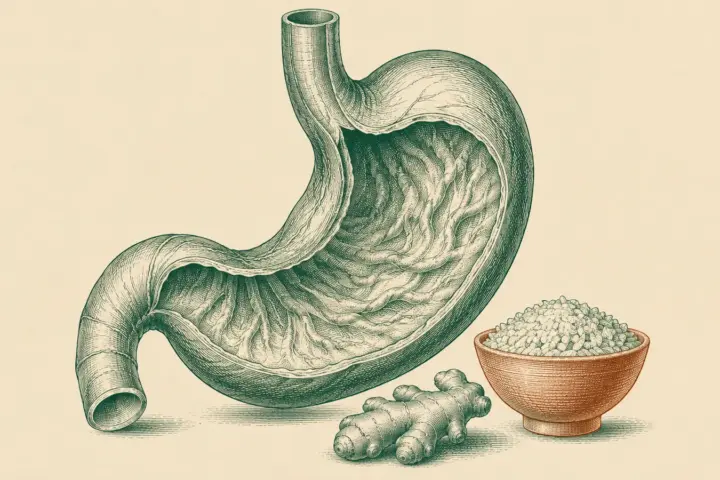

Small intestinal bacterial overgrowth, or SIBO, is a clinical condition in which excess or altered bacteria in the small intestine are associated with digestive symptoms. Diagnosis requires clinical assessment, often supported by a hydrogen-methane breath test. What helps most is clinician-directed treatment, correction of underlying causes, adequate nutrition and selective symptom management—not indefinite restrictive dieting.
Key takeaways:
- Bloating, pain and altered bowel habits can suggest SIBO but cannot diagnose it.
- Breath-test preparation and interpretation materially affect the result.
- Effective care addresses both overgrowth and its underlying cause.
- Restrictive diets may ease symptoms but do not reliably eradicate SIBO.
What is SIBO, and what happens in the small intestine?
Small intestinal bacterial overgrowth is a clinical disorder in which excessive numbers or altered types of bacteria in the small intestine are linked to symptoms, signs or laboratory abnormalities. The American Gastroenterological Association notes that the definition remains imprecise, so a test result should be interpreted alongside the clinical picture.
Bacteria can ferment carbohydrates before absorption is complete, producing hydrogen and other metabolites. Methane is produced by archaea rather than bacteria; excessive methane is therefore termed intestinal methanogen overgrowth, or IMO, and may occur in the small intestine or colon.
SIBO is not a complete explanation for every case of bloating. Irritable bowel syndrome, constipation, celiac disease, lactose or fructose malabsorption, inflammatory disease and medication effects can produce overlapping symptoms.
What are the symptoms of SIBO?
SIBO commonly causes bloating, abdominal discomfort or pain, diarrhea and excess gas, according to the American Gastroenterological Association. Constipation is more strongly associated with excess methane, although symptoms cannot identify which gas pattern is present.
- Visible abdominal distension or bloating after meals
- Abdominal pain, pressure or cramping
- Diarrhea, constipation or alternating stool patterns
- Excess belching or flatulence
- Nausea, early fullness or reduced appetite
More substantial maldigestion can cause fatty stools, weight loss or nutritional deficiencies, but these findings require medical evaluation. Symptom intensity does not reliably measure the degree of overgrowth, and improvement after avoiding food does not prove SIBO.
“A useful SIBO plan protects nutritional adequacy while the clinician investigates why the symptoms developed.” — Ksenia Glinkina, integrative nutritionist-naturopath
Who is more likely to develop SIBO?
SIBO is more plausible when a condition interferes with intestinal movement, anatomy or digestive defenses. Risk does not equal diagnosis, and people without an obvious risk factor can still have symptoms requiring a broader workup.
- Prior abdominal surgery that created a blind loop or altered intestinal anatomy
- Motility disorders, including chronic intestinal pseudo-obstruction
- Structural narrowing, adhesions or small-bowel diverticula
- Diseases that affect intestinal nerves or muscles
- Reduced digestive defenses or selected medication exposures
A clinician should also review constipation, previous infections, operations and current medicines. Recurrent SIBO is more likely to persist when impaired transit or altered anatomy remains unaddressed.
How is SIBO tested?
SIBO is commonly assessed with a glucose or lactulose hydrogen-methane breath test. The test is noninvasive, but rapid intestinal transit, preparation errors and differences between substrates can create misleading results.
| Method | What it measures | Potential advantage | Main limitation |
|---|---|---|---|
| Glucose breath test | Hydrogen and methane, ppm | Less fermentation in the colon | May miss more distal overgrowth |
| Lactulose breath test | Hydrogen and methane, ppm | Travels through the full small bowel | Rapid transit may mimic an early rise |
| Small-bowel aspirate | Microbial growth, CFU/mL | Samples small-bowel contents directly | Invasive and vulnerable to sampling issues |
The North American Consensus defines a hydrogen-positive breath test as a rise of at least 20 parts per million above baseline within 90 minutes. Methane of at least 10 parts per million at any point is considered methane-positive, but clinicians should apply the laboratory protocol and clinical context.
Preparation instructions vary by laboratory and may cover diet, fasting, smoking, exercise, antibiotics, laxatives and motility medicines. Do not stop prescribed medication without instructions from the ordering clinician.
What actually helps SIBO?
SIBO management works best when a qualified clinician confirms that the diagnosis fits, treats the overgrowth when appropriate and investigates its cause. The American Gastroenterological Association advises focusing on underlying causes, nutritional deficiencies and clinician-selected antibiotics; the evidence guiding antibiotic strategies remains limited.
- Confirm the working diagnosis. Review symptoms, risk factors, test preparation and plausible alternatives rather than treating a result in isolation.
- Discuss medical treatment. Antibiotic choice and duration depend on the gas pattern, clinical setting, allergies and local guidance; self-treatment is inappropriate.
- Correct contributing factors. A clinician may assess constipation, impaired motility, structural disease, medicine effects or nutritional deficiencies.
- Reassess the response. Persistent symptoms may require reconsidering the diagnosis rather than repeating treatment automatically.
Regular meals, adequate hydration, sleep, tolerable movement and constipation management may support digestive function. These habits are adjuncts, not substitutes for diagnosis or prescribed care.
Can diet treat SIBO?
No diet has been shown to reliably eradicate SIBO. A short-term reduction in highly fermentable foods may ease gas and bloating for some people, but symptom relief does not prove that microbial overgrowth has resolved.
Broad restriction can reduce fiber variety, social flexibility and energy or micronutrient intake. A practical food plan preserves tolerated protein, carbohydrates, fats and plant foods, then challenges unnecessary exclusions rather than continually shrinking the diet.
Keep a brief record of meal composition, symptoms and stool pattern instead of labeling every reaction as intolerance. People who need structured education can explore Nutriflow’s ProGastro gut and digestion program, while using a qualified clinician for testing, diagnosis and treatment.
Probiotics, herbal antimicrobials and supplement protocols are not automatically appropriate for SIBO. Evidence, quality and interactions vary, so this article does not recommend supplements or dosages.
Why does SIBO treatment sometimes fail?
SIBO treatment may fail because the original diagnosis was incomplete, the underlying driver remains or another condition is producing the symptoms. A positive breath test is evidence to interpret, not a stand-alone explanation for every digestive complaint.
Common mistakes
- Diagnosing SIBO from symptoms or an online questionnaire alone
- Using a breath test without following the laboratory’s preparation protocol
- Treating methane as bacterial overgrowth instead of recognizing IMO
- Repeating antimicrobial treatment without reassessing constipation, transit or anatomy
- Maintaining a highly restrictive diet after its short symptom-management role has ended
A negative test also requires context. Poor sample collection, an unsuitable substrate or production of gases not measured by the device may limit what the test can show.
When to see a specialist
See a gastroenterologist or another qualified clinician when symptoms persist, recur or interfere with eating and daily life. Seek urgent care for warning signs rather than assuming that SIBO is the cause.
- Severe or sudden abdominal pain, or marked tenderness
- Vomiting blood, bloody stool or black, sticky stool
- Inability to pass stool or gas with worsening distension
- Persistent vomiting, dehydration or fever with abdominal symptoms
- Unintentional weight loss, anemia or signs of malnutrition
- Persistent diarrhea, nighttime symptoms or rapid deterioration
Ask a prospective clinician which diagnosis the test is intended to clarify, whether both hydrogen and methane will be measured, how preparation affects validity and what will be investigated if treatment does not help.
Explore ProGastro for clear, practical education on digestion, food choices and sustainable gut-supportive habits.
Frequently Asked Questions
Is SIBO the same as IBS?
No, SIBO and irritable bowel syndrome are not the same condition. IBS is diagnosed from a characteristic pattern of abdominal pain and altered bowel habits after appropriate assessment, while SIBO concerns microbial overgrowth in the small intestine. Symptoms overlap, and the American Gastroenterological Association states that SIBO’s role in common functional symptoms remains controversial.
Can SIBO cause constipation instead of diarrhea?
Yes, constipation can accompany a methane-positive breath test, more accurately called intestinal methanogen overgrowth. Methanogens are archaea rather than bacteria, and methane can originate beyond the small intestine. Constipation alone cannot diagnose IMO, so a clinician should consider stool pattern, medications, pelvic-floor function, transit and other causes.
Can I diagnose SIBO from bloating after meals?
No, bloating after meals cannot diagnose SIBO. Fermentable foods may trigger bloating in IBS, carbohydrate malabsorption, constipation and other conditions. A useful assessment considers the complete symptom pattern, medical history, warning signs and whether a properly performed breath test would change management.
Should I repeat a breath test after treatment?
Not automatically; repeat testing is most useful when the result would change the next clinical decision. A clinician may prioritize the symptom response, nutritional status and underlying cause, or may retest when symptoms persist and the diagnosis remains uncertain. Repeated testing without a management question can add cost without resolving why symptoms recur.
Is a low-FODMAP diet a permanent SIBO diet?
No, a low-FODMAP diet is not intended to become an indefinitely restrictive SIBO diet. FODMAP reduction may temporarily reduce fermentation-related symptoms, but it does not establish or eradicate SIBO. When used, restriction should be purposeful, nutritionally adequate and followed by structured reintroduction to identify personal tolerance.
Can SIBO return after treatment?
Yes, SIBO can recur, particularly when altered anatomy, impaired movement or another predisposing factor remains. Recurrence should prompt review of the diagnosis and contributing conditions rather than automatic cycles of antibiotics or restrictive diets. A gastroenterologist can decide whether retesting, different investigations or treatment of an underlying disorder is appropriate.
Author: Ksenia Glinkina — integrative nutritionist-naturopath, Bastyr University (USA), 15+ years of practice.
Nutriflow provides evidence-informed nutrition and wellbeing education. For individual symptoms, testing and treatment decisions, consult a qualified clinician.
Sources
- American College of Gastroenterology clinical guideline on SIBO
- American Gastroenterological Association clinical practice update on SIBO
- North American Consensus on hydrogen and methane breath testing
- PubMed review of the benefits and limitations of SIBO breath testing
- NHS guidance on abdominal-symptom warning signs
This article is for information only and does not replace a consultation with a qualified clinician. If you have symptoms, see a specialist.